

Will Abu Dhabi's Property Market Correct in 2026?

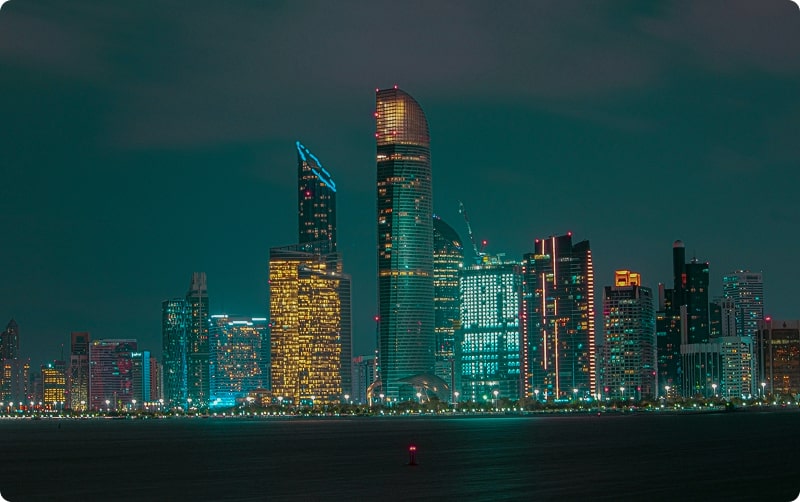
Every housing boom eventually invites its own mythology. In the UAE, the latest instalment is the claim that 2026 will be the year the market cracks. Dubai’s rapid off-plan cycle, its appetite for global capital and the lingering memory of 2009 give the rumour oxygen. But Abu Dhabi, often pulled into Dubai’s gravitational field for the sake of simple narratives, offers little evidence to support the idea of an imminent collapse.
Abu Dhabi’s property market is being lifted by something far more durable than investor exuberance: people. The emirate’s population expanded by roughly 6% cent a year between 2022 and 2024, reaching more than four million residents. This is not the demographic shape of a bubble; it is the profile of a labour market that is growing, diversifying and retaining people for longer. New arrivals need homes, existing residents trade up, and long-term programmes such as the Golden Visa blunt the volatility traditionally associated with expatriate turnover.
Supply, meanwhile, has not kept pace. Residential stock has risen by only about 2.6 per cent a year over the same period, and even with a more ambitious pipeline, new delivery is expected to rise to only around 4.6 per cent annually until 2028 - still short of projected demand. That imbalance has already seeped into the rental market. Apartment rents rose by double digits in the first half of 2025, while villas saw a more measured rise. In a city where roughly 70 per cent of households rent, the behaviour of rents offers a more honest signal of demand than sales headlines. Rents do not surge in a market drowning in supply; they rise when scarcity is real.
It is this rental dynamic that distinguishes Abu Dhabi from overheated markets elsewhere. A speculative bubble relies on weak rental foundations - on buyers chasing capital gains disconnected from end-user demand. In Abu Dhabi the opposite is true. Rising rents, alongside rising occupancy, suggest that price movements are being supported by genuine population pressure rather than financial euphoria. A healthy rental market, paradoxically, is the strongest argument against a sharp correction.
Another stabilising force is the nature of buyers themselves. Nearly 80 per cent of sales in Abu Dhabi are cash transactions, insulating the market from the fragile mood swings of interest-rate cycles. Markets reliant on leverage can unravel quickly; markets built on cash tend to move slowly and absorb shocks more gracefully. Forced selling - the accelerant of housing crashes -remains rare.
None of this means prices will rise indefinitely. Segments of the luxury market may cool, particularly where supply has been concentrated. Developers may space launches more cautiously. And Dubai, more exposed to speculative appetite and global liquidity cycles, may experience a mild correction in certain districts. But the assumption that Abu Dhabi must mirror Dubai’s oscillations reflects misunderstanding rather than evidence. The two emirates share borders, not market structures.
Could Abu Dhabi still face a downturn? Conceivably - but the triggers would have to come from far outside the property sector. A global recession, a sustained collapse in oil prices or a geopolitical shock could weaken demand more broadly. Short of these, the market is anchored by firm, slow-moving fundamentals: demographic growth, stable job creation, a tightening rental base and chronically insufficient supply.
Could prices fall? Only if something interrupts the very force holding the market up: population growth. A global recession, oil-price collapse or geopolitical shock that constrains hiring and relocations could weaken demand. Short of such a black-swan event, the city’s fundamentals - demographic momentum, corporate inflows, rising rents and chronic undersupply - leave little room for a 2026 crash.