

Abu Dhabi's Quiet Pivot Toward Affordability

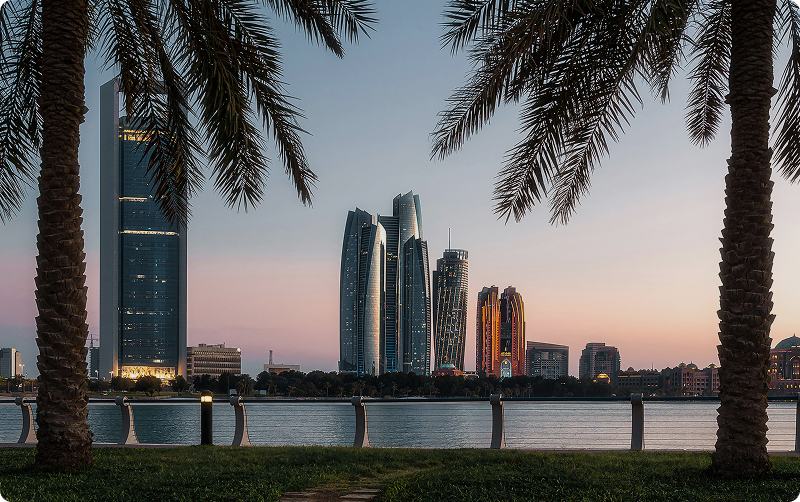
For years, Abu Dhabi's property market has been defined by big, glossy announcements: new islands, waterfront districts, villa communities promising resort-style living. But beneath the skyline-friendly headlines, something more subtle is happening. The emirate is making an unusually deliberate shift toward affordability - not as an afterthought, but as a strategic pillar of its next phase of urban growth.
Aldar, the city's dominant developer, has been unusually explicit about this pivot. In a recent interview, Group CEO Talal Al Dhiyebi described affordable lifestyle as "central to Abu Dhabi's next growth chapter," a line that would have sounded out of place in a market long anchored by premium launches. The company has been working closely with the Department of Municipalities and Transport to build what it calls "integrated communities" - less about marble lobbies, more about predictable rent, access to schools, retail, healthcare, and transport.
It's not philanthropy. It's economics.
The demand curve has shifted. The emirate's non-oil economy is expanding, its population is rising, and its labour market is quietly diversifying beyond the high-income professional class that powered earlier real-estate cycles. The result is a larger share of residents who don't need luxury - just stability, connectivity, and a price point that doesn't consume half their income.
Developers are responding because the math is compelling. Bloomberg recently reported that Aldar is increasingly "betting on cheaper homes" - not simply by cutting prices, but by experimenting with new funding structures such as private-credit mechanisms to support both buyers and project liquidity. In parallel, The National noted that Aldar's affordable portfolio has become a "top priority," particularly in mid-market communities like Shamkha, Reem, and parts of Yas, where price points remain within reach for middle-income households.
This is also reflected in Aldar's pipeline. Nearly 2,000 more affordable rental units planned for Al Shamkha and over 600 units on Yas Island were unveiled this year, a marked departure from the emirate's historical emphasis on high-end, branded, off-plan launches. These projects are deliberately priced to widen the funnel of eligible tenants and buyers - a pragmatic recognition that sustainable absorption depends on serving the center of the market, not its edges.
The city's policymakers are not passive observers in this shift. Abu Dhabi's long-term planning frameworks - from urban mobility to community infrastructure - have increasingly leaned on affordability as an economic stabilizer. A market dominated by premium inventory is volatile; a market anchored by livable, attainable neighborhoods is more resilient. Affordable housing, in this context, is less a social policy and more a macroeconomic one.
None of this means Abu Dhabi is abandoning its premium segment. Far from it. Luxury launches still sell out in hours, developers still enjoy double-digit margins on waterfront villas, and global capital remains enthusiastic. But the story beneath the surface; the story shaping the city's next decade; is the broadening base of who the market is for.
Abu Dhabi is betting that the long-term value of its real estate lies not in selling more expensive homes, but in building a city where more people can afford to stay, grow, and spend. Affordability, once a quiet corner of the market, is becoming a deliberate driver of policy, investment, and developer strategy.
It is a shift that doesn't grab headlines but will, in time, shape the skyline.
Sources:
WAM – Aldar to develop new residential communities in Shamkha